
Yakhchal
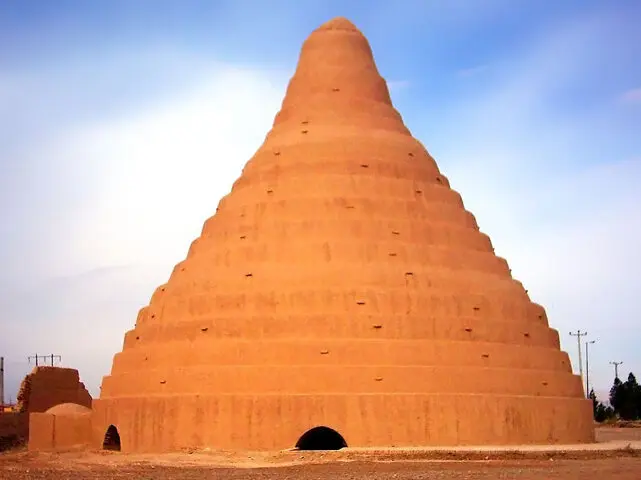
Before the development of modern technology, obtaining ice was quite difficult for people living in hot and dry climates. In ancient Iran, an interesting architectural structure called the Yakhchal was used to produce and preserve ice for several months.
In Persian, the word “Yakhchal” literally means “ice pit”. These structures were a special architectural system designed for producing, storing, and using ice during the hot months.
The history of these structures dates back to as early as the 4th century BCE. They were used in Iran to produce and store ice until refrigerators became widely available, that is, until the 1960s.
Many Yakhchals built hundreds of years ago have survived to this day. In 2005, 56 Yakhchals were registered by the Iranian Cultural Heritage Organization, four of which dated back to the Safavid period.
How was the ice made?
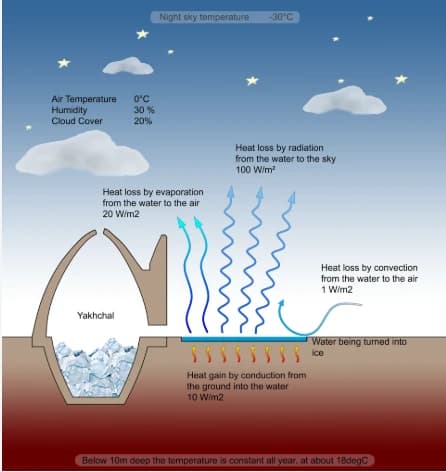
Some Yakhchals had large but shallow pools nearby where ice was produced. These pools could be about 100 metres long and 10 metres wide, while their depth was only 40–50 centimetres. Water was mainly brought to these pools through qanats. As the water travelled through underground channels, it was protected from direct sunlight before being directed into the pools.
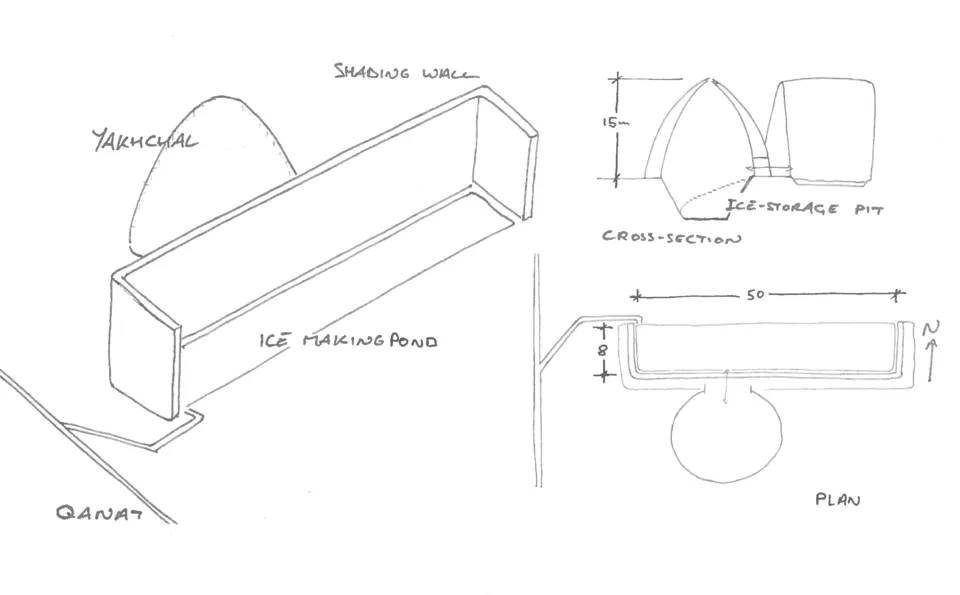
The shallow depth of the pools was important: the water cooled more quickly at night and, when the temperature dropped low enough, it froze and formed ice. In addition, walls 10–15 metres high were built around the pools to cast shade over them during the day. These walls reduced direct exposure to sunlight and helped keep the water cooler.
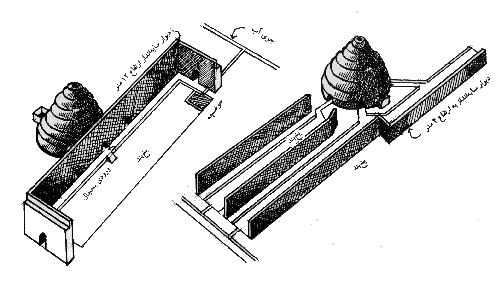
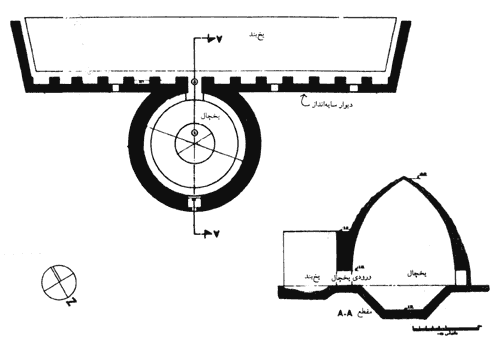
In this way, the qanat supplied the water, the shallow pools created the conditions for it to freeze, and the high walls protected the process from the sun. Once the ice had formed, it was moved into the deep and cool storage area of the Yakhchal.
Why were the walls so thick?
One of the most striking features of a Yakhchal is its thick walls. In a hot climate, thick walls were used to reduce the amount of heat entering the structure. Special heat-insulating mortars were also used in construction to prevent heat from penetrating inside.
Why was the dome needed?
The most easily recognisable part of a Yakhchal from a distance is its large dome. This tall, domed structure created a large interior volume, protected the storage area from direct sunlight, and helped regulate hot air.
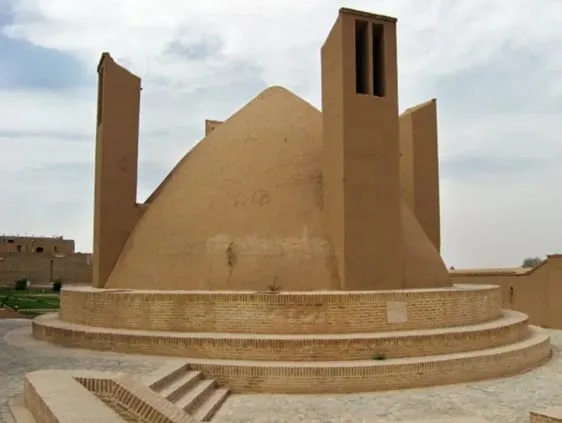
Some Yakhchals also used wind towers, known as badgirs, to improve air circulation. This allowed the wind to be used passively for cooling. As a result, ice produced during the winter could be preserved until the summer months.
Why was ice needed in summer?
The ice stored in Yakhchals was used to prepare drinks and preserve various foods.
Today, the convenience provided by a refrigerator is simply a part of our everyday lives. But in ancient Iran, people prepared ice during the winter, stored it for months, and used it during the hot summer days. In other words, the comfort that seems completely ordinary to us today once required months of preparation.