


When people read a novel, they usually notice the aspects that are connected to their own interests or profession. For example, when a psychologist reads Crime and Punishment, they can more easily understand and analyze the psychological events and processes within the story. An economist can better evaluate the extent of the protagonist’s poverty and hopeless situation. An architect, however, can mentally recreate the room, the building, the street, and the staircase scenes described in such detail by the author, imagining every subtle element of the space.
Perhaps our professions become a part of our soul. Or perhaps we begin to see the world through the eyes of our own discipline.
When most people read a description of a narrow and cramped apartment, an architect imagines from which direction the light enters the space, how the room is ventilated, the height of the ceiling, the placement of doors, and even how the furniture affects human movement inside that space.
But while reading Crime and Punishment as an architect, I found myself asking one question more than anything else:
If Raskolnikov had not lived in that house, in that neighborhood, would he still have committed the crime?
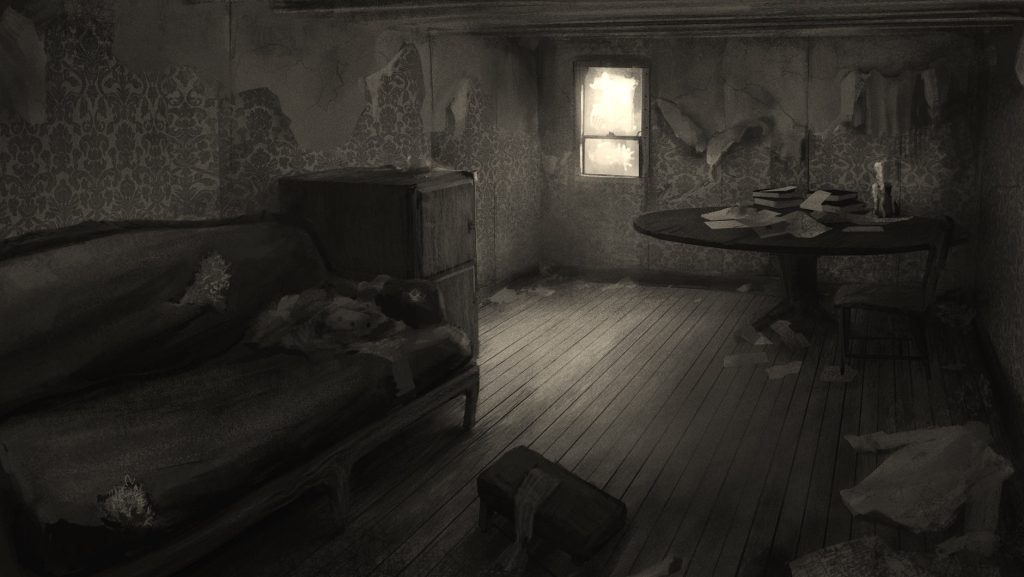
It is true that this novel is not based on real events, but why did Dostoevsky portray his character specifically in such a place?
Can a space change a person?
I have already discussed the influence of the environment on people in my previous articles. The surroundings we live in shape our thoughts, direct us toward certain paths, and even strengthen emotions that already exist within us.
Perhaps it is difficult to notice and understand this in everyday life. However, if you have lived in the same environment for a long time and later moved away from it, you may begin to recognize the changes within yourself.
Or let us remember the COVID-19 pandemic, a period experienced by all of us. What changes did you notice in yourself when you stayed at home for a long time? Some people left the city and experienced a different environment, while others remained alone between four walls. In every case, we witnessed how space affects our mood, our perception of time, and our relationships with other people.
Now, let us think about Raskolnikov.
If he had not lived in a narrow, suffocating, and dark room among rats, would he still have become a criminal? When a room is filled with darkness, do our thoughts also become darker? A dark space can create feelings of depression, meaninglessness, closeness to death, and similar thoughts. In bright and spacious homes, do these feelings disappear from our minds?
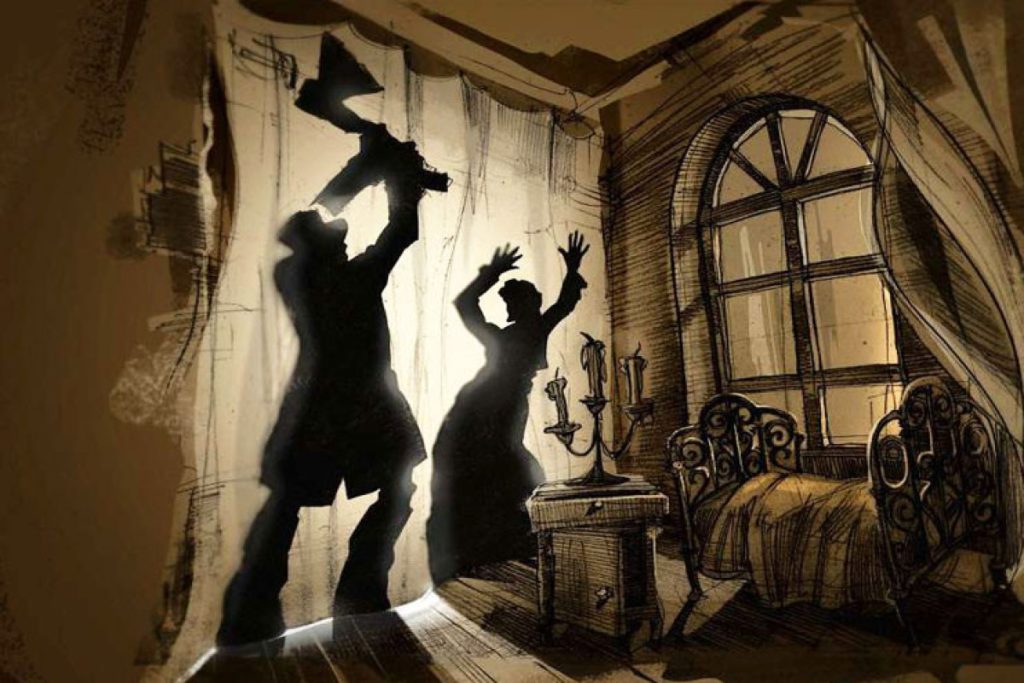
Or does entering a damaged, damp, and neglected building entrance create the same emotions as entering a renovated, spacious, bright, and clean one? Based on my personal observations, I can confidently say that there is a significant difference between these two environments.
However, the main point is this: not every person living in a dark room becomes a criminal. Likewise, not every person living in a bright and spacious home becomes a good person. Architecture cannot determine a person’s destiny on its own. However, space can strengthen emotions and states that already exist within a person.
Raskolnikov’s path toward crime cannot be explained only by the darkness of his room. His poverty, loneliness, belief that he was superior to society, his theory about “ordinary” and “extraordinary” people, his sense of responsibility toward his family, and his moral fragmentation also played significant roles in this journey.
In the novel, it is not only Raskolnikov’s room that is described. The entire city of Saint Petersburg is portrayed through the protagonist’s perspective as an oppressive and disturbing environment. Narrow streets, dirty courtyards, damp buildings, dark staircases, heavy air, and crowded spaces increase the psychological tension of the story.
Now, let us return to our main question: What is the architecture of crime, and how does it affect our lives?
What is the Architecture of Crime?
The expression “architecture of crime” is not an official term in architecture. However, within the framework of modern urban planning and social criticism, it is used as a metaphorical concept.
The architecture of crime can be understood as an approach that examines how architecture can create conditions for crime, which spaces allow crimes to occur more easily, and how the physical environment influences human behavior.
This concept includes several aspects:
- dark and uncontrolled spaces;
- blind spots that allow people to hide;
- neglected and abandoned buildings;
- living environments where people are isolated from one another;
- urban planning that creates excessive density;
- spaces that create feelings of fear and tension;
- architectural solutions that reduce the possibility of witnessing a crime or intervening.
Such spaces do not directly turn people into criminals. However, they can make criminal acts easier to commit and weaken people’s sense of security.
When a space appears neglected, dark, and uncontrolled, people may perceive it as an environment where social order is weak. A bright, open space where people can see one another sends the opposite message.
Therefore, while space is not a direct cause of crime, it can have a powerful influence on human thoughts, behavior, and sense of safety.
If the places we live in affect our behavior to such an extent, then we, as architects, must ask ourselves another question: What kind of spaces are we forcing people to live in today?