
Socialism or Capitalism?
I am a representative of the last generation that witnessed a time when people would visit each other’s homes without notice. Homes were kept tidy as if someone could arrive at any moment, and sweets were always ready to be served. Because back then, a sudden knock on the door was nothing unusual.
It was not so much traditions and customs as the socio-economic structure of the time that played an important role in shaping this way of life.
In the socialist system, production was not as extensive as it is today, so people were encouraged to live together more. Large families were presented as a symbol of happiness, while people who lived alone or had small families were portrayed as unhappy. Even several families living together in the same house were considered an example of family happiness.
The capitalist system, on the other hand, increases production and encourages people to live alone. Let people live alone so that we can sell them more things. Let them get divorced so that the need for two separate homes arises. Even if they get married, let them live in separate homes (a new trend that has not reached our country yet). And let’s encourage those who do not get married to have pets, so that if they do not spend money raising children, they can spend more on their pets.
But how does all of this affect architecture?
I will not talk about its impact on the housing construction market. It is already well known that demand for smaller apartments has increased. Alongside economic reasons, the growing number of people living alone also plays a role in this.
But the main issue is not apartments, but the diversity of “third places.”
In the socialist system, people would visit each other’s homes, set large tables, and celebrate birthdays and holidays at home. Today, however, it has become normal to celebrate special occasions in restaurants, meet friends in cafés, and for children to gather not at home but in entertainment centres.
Having guests at home is also no longer considered as normal as it once was. Because for the capitalist system, a gathering held at home has no direct economic value.
But this change did not happen overnight. For people to become accustomed to socialising outside the home, spaces that resembled their familiar environment had to emerge.
Many of you probably remember “Chudo Pechka” in Baku from around 15 years ago. The atmosphere there was different from that of cafés today. Instead of unfamiliar foods, there were flavours that reminded people of a home environment. You could even find the milky cocoa that our mothers used to make for us when we were children.
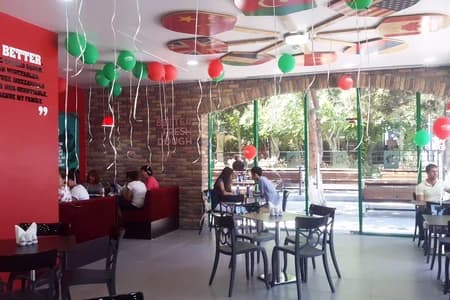
Through places like Chudo Pechka, people gradually became accustomed to café and restaurant culture. If this change had happened all at once, society probably would not have accepted it as easily as it does today. First, places that reminded people of the comfort of home emerged, and then these spaces were gradually replaced by modern café concepts.
Then we grew tired of the café environment itself and began looking for a freer, more informal atmosphere. Thus, anti-cafés emerged. For modern young people who did not feel close to tea house culture, book cafés were created. We turned to coworking spaces for work and art cafés to spend time with our friends.
One of the interesting aspects of the capitalist system is that it not only creates demand, but also creates new spaces that correspond to that demand.
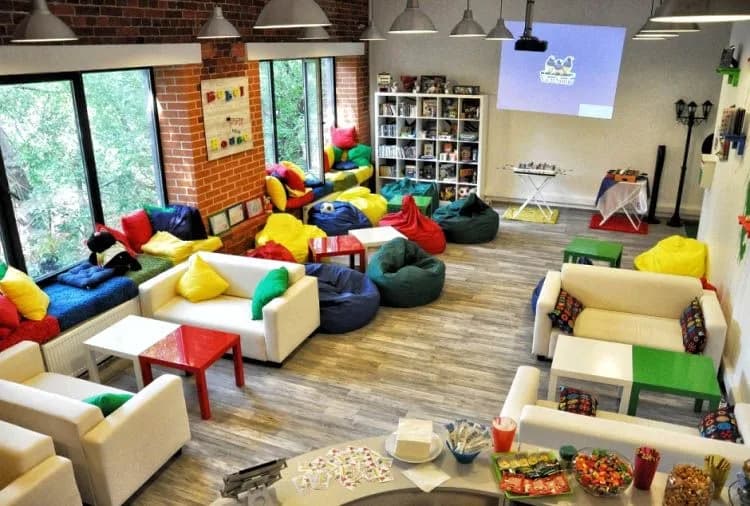
As people’s lifestyles change, so do their needs for spaces. As the home moves away from being the main place for socialisation, some of its functions are taken over by restaurants, cafés, entertainment centres, and other “third places.”
In a world where our thoughts, choices, and desires are shaped by such systems, how can we distinguish what we truly want?