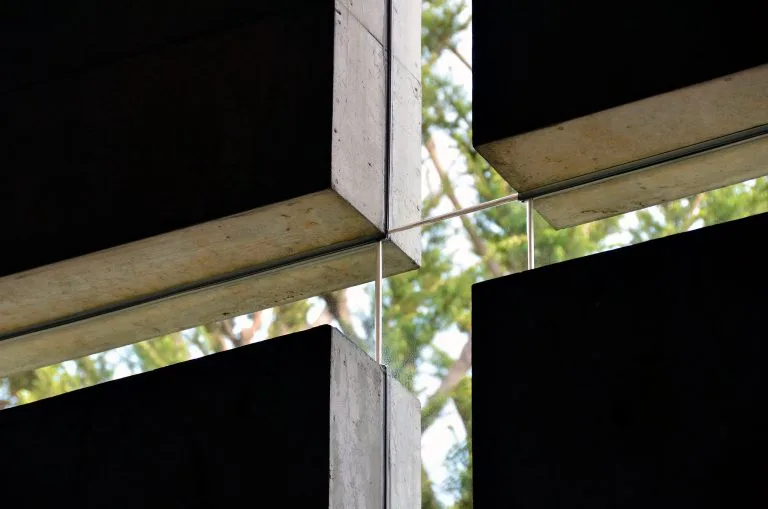
Church of the Light and Tadao Ando
When I hear the expression “light and shadow,” the first person who comes to mind is my first architecture professor, Kazim Agabeyov. It was from him that I first learned how important light and shadow are in architecture. In fact, during the first semester of university, one of the subjects we focused on the most in the course Fundamentals of Architectural Composition was precisely light, shadow, and volume. Kazim Agabeyov used to say, “If you cannot feel light and shadow, you will never understand the depth of architecture.”
At that time, I viewed this subject mainly through the perspective of façades. Our professor explained that the angle at which sunlight falls on a building, the shadows it creates, and the details highlighted by light can completely transform the character of a façade. After those lessons, I even began to look more positively at summer, a season I had never liked. On days with strong sunlight, the details of classical buildings become much more apparent. Columns, cornices, reliefs, and other architectural elements appear more expressive thanks to the interplay of light and shadow. It is even possible to look at the same building at different times of the day and realize that it takes on an entirely different character.
My first understanding of light and shadow came through façades.
But…
Sometimes architects use this medium in a completely different and far more creative way. Occasionally, I come across projects in which light serves not merely as illumination but as an essential component of the architecture itself. Church of the Light, which I want to discuss in this article, is one such project.
The use of light as an architectural medium is by no means unique to the modern era. Throughout history, architects have taken advantage of the possibilities created by light and shadow. However, what caught my attention in Church of the Light is that light itself becomes the central idea of the project.
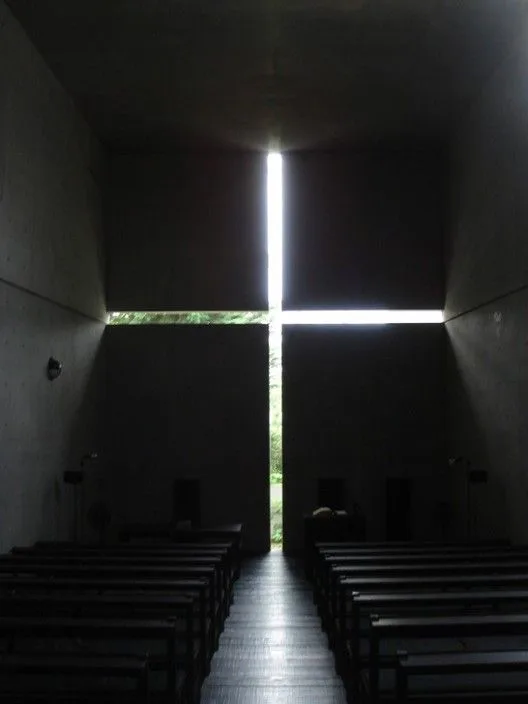
The most fascinating aspect is that this effect is achieved through an incredibly simple solution. A cross-shaped opening has been cut into the front wall of the church, allowing daylight to enter the interior. At first glance, it seems so simple that one cannot help but wonder, “Is that really all?”
But then you realize that the essence lies precisely in that simplicity. What leaves the strongest impression is the cross formed by light. As the light changes throughout the day, the space changes with it. That is the greatest strength of the project. After all, the Japanese architect Tadao Ando designed this building not with concrete, but with light.
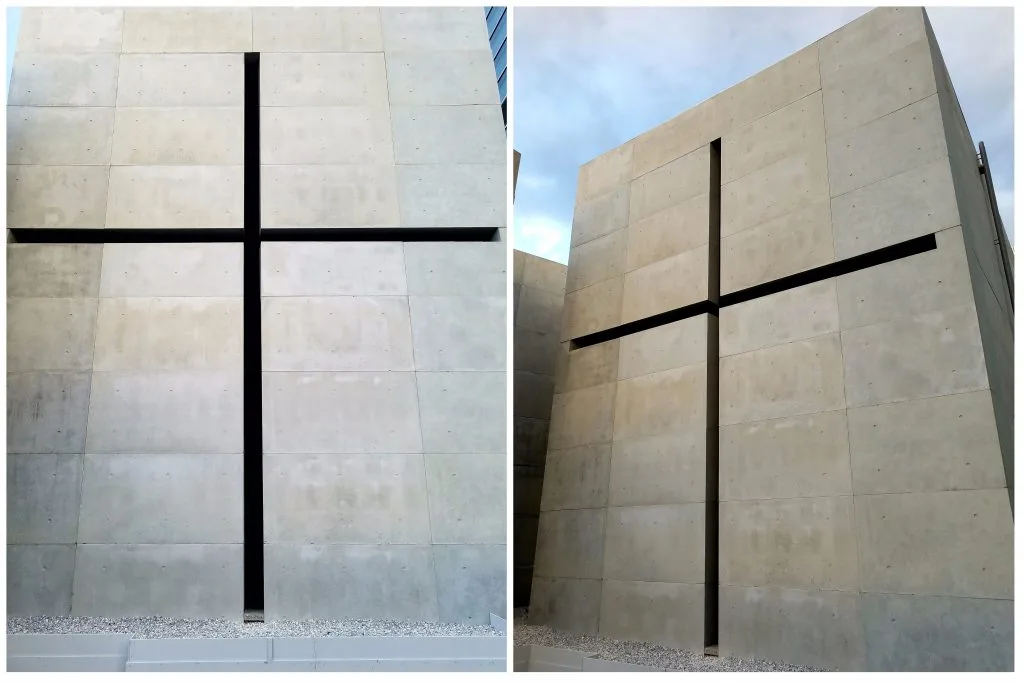
In general, when we think of Christian architecture, what comes to mind are grand cathedrals, colorful stained-glass windows, and depictions of the Virgin Mary and Jesus Christ. In many churches, religious narratives and sacred figures are an inseparable part of the architecture. For those of us living in a Muslim country, a church can sometimes even feel like a museum.
In Church of the Light, however, the architect succeeded in avoiding that impression. There are no statues of the Virgin Mary or religious images covering the walls. Instead, the architect directs the visitor’s attention not to visual representations, but to the impression created by light itself. The medium here is neither sculptures, candles, nor paintings, but light.
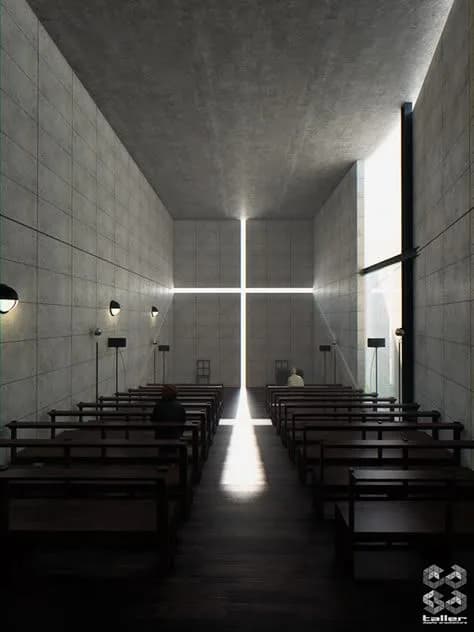
Another detail of the project that made me think is the concrete wall extending beyond the main volume. Normally, when entering a church, one expects to step directly into the worship space. Here, however, the architect deliberately delays that encounter. First, the visitor is guided along a narrow passage, and only then is confronted with the main space.
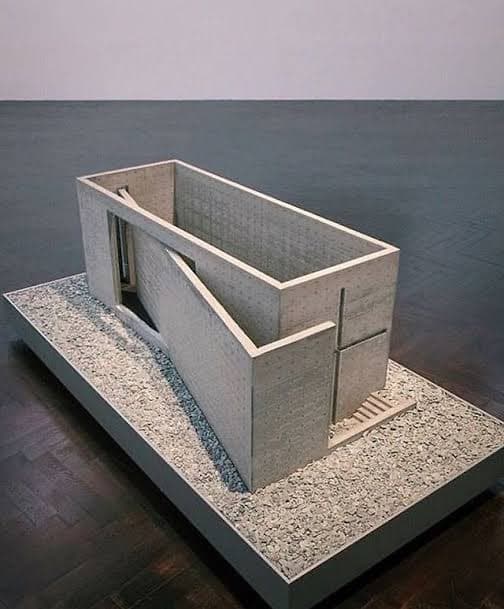
It seems to me that the primary purpose of this wall is not so much to create a physical barrier as to establish a psychological boundary. As people walk along that path, they begin to reflect on their mistakes and sins.
The more you look at this project, the more you realize that architecture is the art of achieving simplicity.