


Every profession adds something to a person’s character. For example, there are jokes about how most physicists tend to have unusual hairstyles 🙂 Architects, on the other hand, are often known for their pursuit of perfection, their tendency to critique everything, and sometimes their inability to be fully satisfied with anything.
The confidence that comes from creating, the ability to spot mistakes quickly and the urge to correct them, and sometimes being overly demanding of each other’s work… No, we’re not jealous. On the contrary, architects are often among the first to appreciate a truly good project. Yet some of us value profit more than professionalism. In fact, let’s put profit aside for a moment — some projects are simply lacking in taste.
Speaking of taste, there’s a famous saying: “Taste and color are not up for debate.” Fair enough, but I’m not sure how well that idea applies to architecture.
For example, someone may not dress in a way that appeals to my taste. I might look at them, dislike the outfit, and continue on my way. But when we’re talking about a large building rising in the middle of a city, the situation becomes a little different. That building doesn’t belong only to the architect who designed it. It becomes part of the cityscape, something thousands of people see every day. That’s why I believe that in architecture, the concept of taste is not entirely a personal matter.
The best way to understand what a building adds to a city—or takes away from it—is through everyday experience. That’s one of the reasons I enjoy exploring cities on foot. Project images and renderings never tell the whole story. You can only understand a building’s relationship with the city and its impact on people when you encounter it in daily life.
Unfortunately, there aren’t many routes in my city where I can comfortably walk while observing interesting buildings. Don’t get me wrong; we have plenty of beautiful historic architecture. The problem isn’t the buildings themselves. The problem is the lack of streets where I can enjoy them while walking comfortably. One moment there’s a lamp post standing in the middle of the sidewalk, the next there’s uneven pavement, or a car suddenly climbing onto the pedestrian path…
As a result, I often find myself walking along the same routes. I pass through the area near Sahil Metro quite frequently. Whenever I do, I pay close attention to the buildings around Sahil Garden.
But…
I have to admit that there’s one building there that makes me look down at the ground rather than at the city every time I see it.
Not because I’m embarrassed.
Simply because I don’t want to see it.
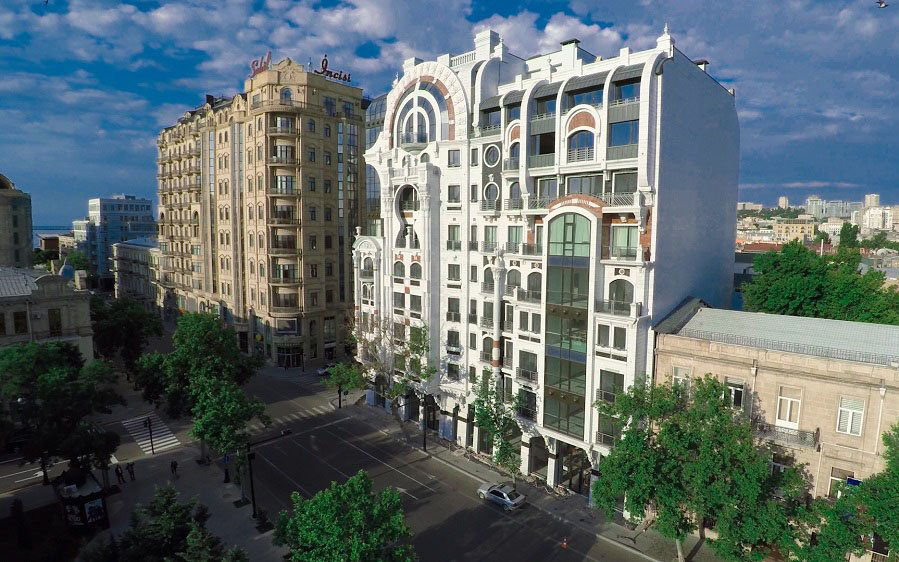
Sometimes I wish technology would advance far enough to give us magical glasses that could hide the things we don’t want to see in the city. I often wonder how many buildings I would still be able to see after putting them on. More specifically, how many structures marketed as “modern architecture” would remain visible?
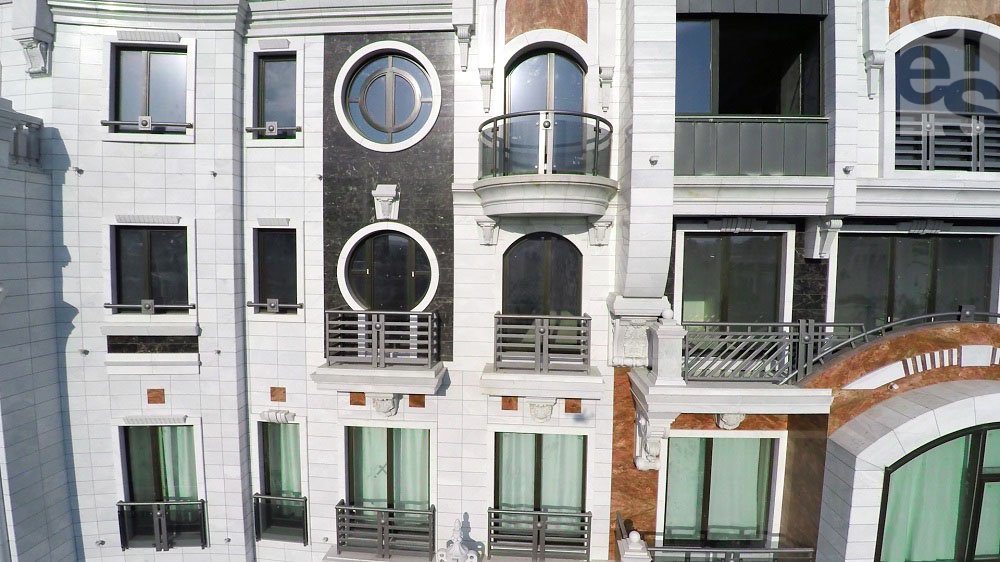
There’s one thing I can’t understand: why should a building imitate the architecture of a previous era? After all, you were built in the twenty-first century.
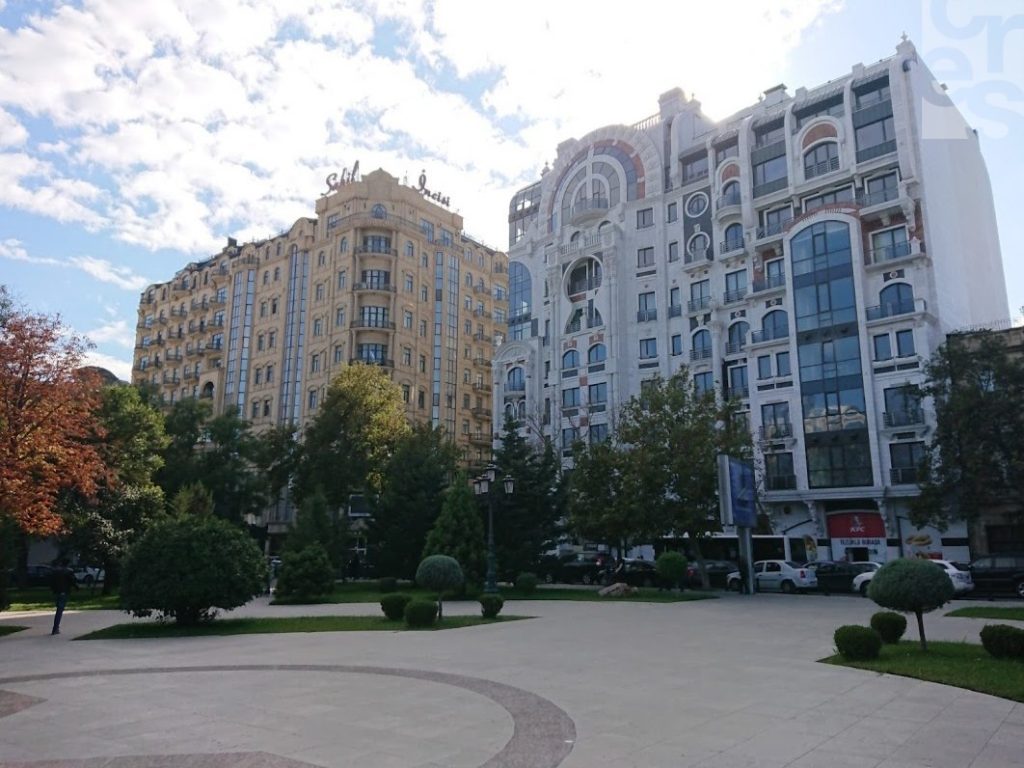
I remember when the building was first completed, its façade wasn’t nearly as overloaded as it is today. Back then, I thought that with time it would become part of the city and that people would eventually get used to it. Today, whenever I walk down that street, I find myself trying to focus my attention elsewhere. Unfortunately, it’s not that easy to ignore a building of that scale.
You know, sometimes a project changes so much during construction that almost nothing remains of the architect’s original vision. Perhaps that’s what happened here as well. Maybe the architect looks at this building today and feels embarrassed. But even if that’s not the case, another question remains: why was such a large and assertive structure allowed to rise among the surrounding historic and low-rise buildings in the first place?
When I walk through our city, I don’t feel a sense of harmony. In fact, the city’s skyline often reminds me of a heart monitor. A low-rise building, then a sudden spike in the form of a massive tower, followed by another drop. The difference is that on a cardiogram, there’s a reason for those fluctuations. In the city, it’s hard to find one.