


Throughout my life, I have encountered many different kinds of people: both good and bad. But over the past year, I have come across far too many people who took advantage of my work and presented my efforts as their own. Apparently, everything I have experienced so far still hasn’t been enough for me to learn this lesson. Because I keep finding myself in the same situation again and again.
Maybe the problem is that I trust people too easily… But I know one thing: I am not the first person in the world whose work has been used by others, and I certainly will not be the last.
In this blog, I want to talk about Marion Mahony Griffin. Many architectural historians describe her as a “brilliant architect who remained in the shadows.” Her work influenced several European architects, including Le Corbusier, and played an important role in shaping the architectural identity of an entire city like Canberra. Yet the recognition and fame did not belong to her, but to the men who stood around her.
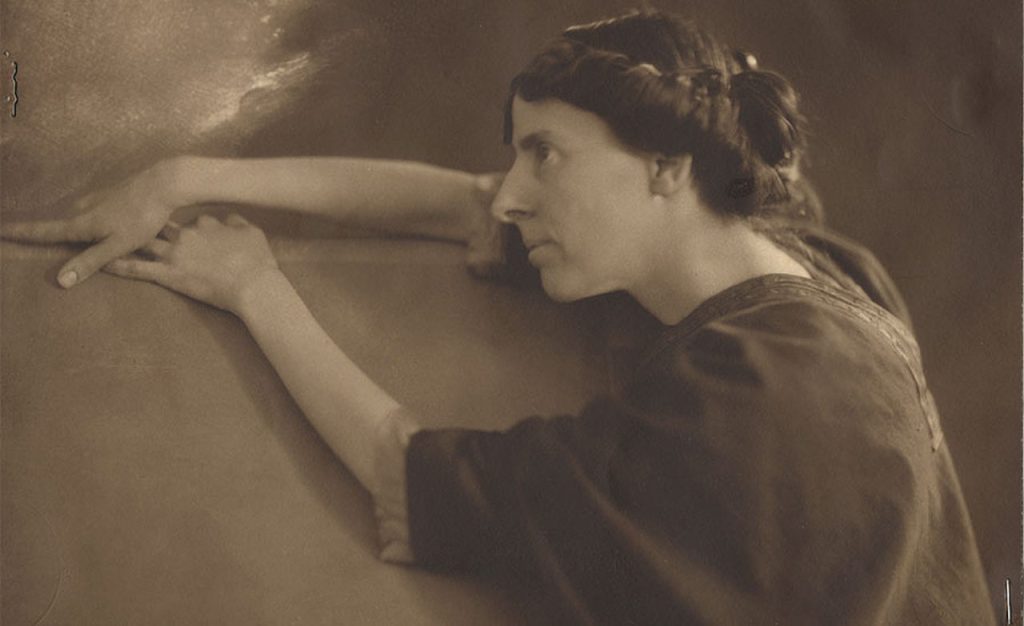
In 1894, Marion graduated from the architecture program at the Massachusetts Institute of Technology. She became the second woman in the history of the university to receive an architecture degree. In the state of Illinois, she was the first woman to obtain an official license to practice architecture.
Of course, these facts can easily be read as simple biographical information. But it is important to understand the time period Marion lived in. In an era when architecture was largely considered a profession belonging to men, even a woman receiving an architectural education was seen as something unusual. The possibility of working professionally and gaining recognition under her own name seemed almost impossible.
Despite all these obstacles, Marion managed to create a place for herself in this field. I wonder, would today’s motivational coaches consider her life a true success story? 🙂
A year after graduating from university, in 1895, Marion began working at Frank Lloyd Wright’s office in Chicago with the help of a friend. During her early years there, she mainly worked on furniture design, stained glass, and interior elements. For some reason, when reading the biographies of women architects, one interesting pattern often appears: many of them began their careers with furniture design.
Later, Marion made a significant contribution to the development of the Prairie School, a new architectural movement that became one of the major turning points in American architecture. She was especially influential in the field of architectural drawings and project visualization, where she created a unique style of presenting designs.
Barry Byrne, one of Frank Lloyd Wright’s former employees, recalled that Wright sometimes organized design competitions among the staff in his office, and Marion won most of them. However, Wright kept her drawings for himself and used them in his later projects. He even punished employees who mentioned that the real author of those works was “Miss Mahony.”
I admired Frank Lloyd Wright’s work until I learned Marion’s story… What can I say, I am an emotional person, and I cannot always look at such situations completely objectively.
Marion’s drawings made up a large part of Wright’s famous Wasmuth portfolios, which were published in Germany in 1910. These two volumes played a major role in introducing Wright’s work to Europe. The drawings in the portfolios attracted the attention of many European modernists, including Le Corbusier. But the people who admired these works, of course, had no idea who their true creator was.
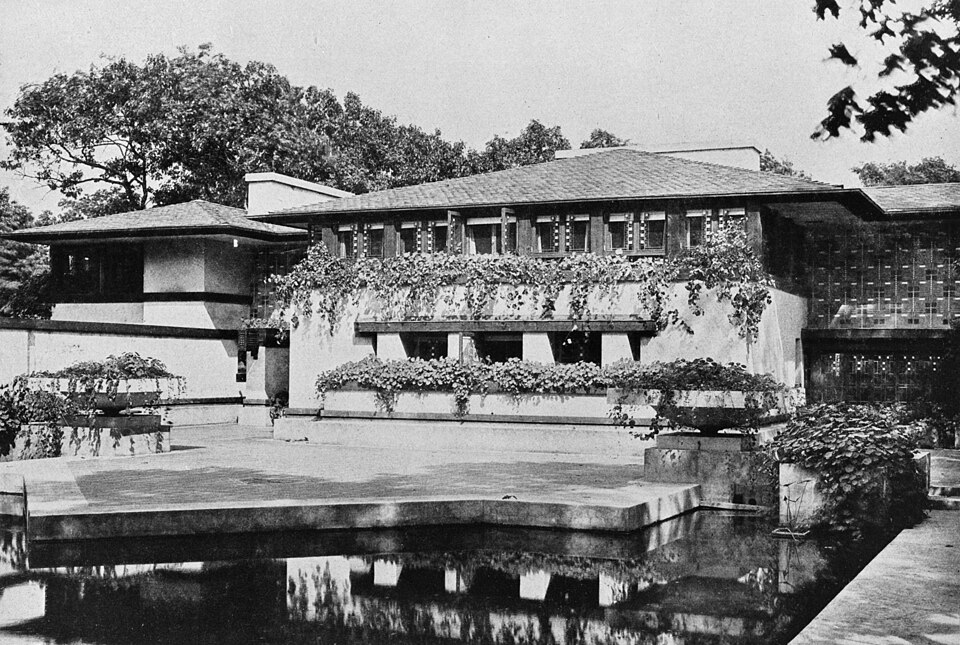
Years later, Deborah Wood, who organized an exhibition of Marion’s work, said that many of the famous images people associate with Wright were actually created by Marion herself. Instead of thanking her, Wright portrayed Marion as someone who was merely imitating his style. Unfortunately, there are many people like this in life.
In 1909, Frank Lloyd Wright suddenly left for Europe. The reason was not architecture, but love. Although calling it simply “love” is quite difficult. The situation was that Wright was involved in a relationship with the wife of one of his clients.
When he left, he abandoned not only a scandal behind him, but also unfinished projects, clients, and many unresolved responsibilities. Marion had to complete part of this work.
One of those projects was a group of three houses in Decatur, Illinois. While working on this project, Marion reached out to Walter Burley Griffin, one of Wright’s former employees. This collaboration would eventually completely change both of their lives. Whether it changed them for better or worse, I will leave that for you to decide after reading their story.
Marion and Walter shared very similar views on architecture. They both loved nature and believed that buildings should not dominate their surroundings, but instead exist in harmony with them. It was around these ideas that their relationship grew, and in 1911 they got married.
Shortly after their marriage, an international competition was announced for the design of Australia’s new capital city, Canberra. At first, Walter was not interested in participating, but Marion convinced him to prepare a proposal. And unsurprisingly, one of the most impressive parts of the project was once again the visualizations created by Marion.
For the Canberra project, she prepared sixteen large-scale illustrations. But Marion had never even been to Australia. Despite this, her drawings captured the vastness of the Australian landscape, its harsh character, and its natural harmony.
The buildings appeared among mountains, water, and greenery, as if they were not fighting against nature but becoming a part of it. And the project won the competition.
But once again, Marion’s name remained in the background.
However, Walter deserves recognition: unlike Wright, he never denied Marion’s contribution. In fact, in one of his interviews, he stated that the victory belonged more to Marion than to himself. At this point, Walter deserves our respect.
In 1914, the Griffins moved to Australia. There, Marion continued working not only on the Canberra project but also on various residential buildings, interior designs, and urban planning projects.
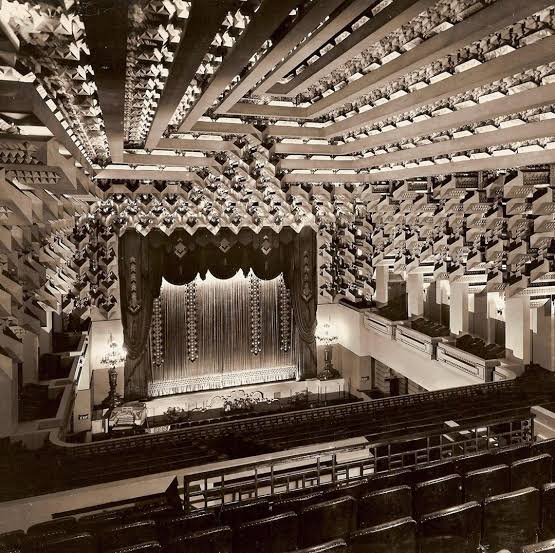
One of the most notable projects she contributed to in Australia was the Capitol Theatre in Melbourne. The theatre’s unusual geometric ceiling is still considered one of the most impressive features of the building today.
In 1935, Walter received a job offer from India. He was invited to design a library project for the University of Lucknow. A year later, Marion followed him to India.
However, in 1937, Walter unexpectedly passed away. Marion lost not only her husband but also her creative partner, with whom she had shared years of work and ideas.
A year later, she returned to Chicago. After coming back, Marion continued working in architecture, gave lectures, and began writing down her memories.
Marion Mahony Griffin died in 1961 at the age of 90. She spent the final years of her life facing financial difficulties.
And in her death certificate, her profession was mistakenly listed as a teacher at a public school.
Imagine a person who was the first licensed female architect in the United States, who helped make Frank Lloyd Wright famous through her visual style, who played a key role in shaping the design of a city like Canberra, and who worked on dozens of buildings and urban planning projects…
Yet even after her death, she was not properly recognized as an architect.
The greatest tragedy of people who remain in the shadows is that their work is used by others, their creations bring fame to someone else, and they themselves remain only as a small note in history.
But Marion Mahony Griffin was never just a small note in history.